
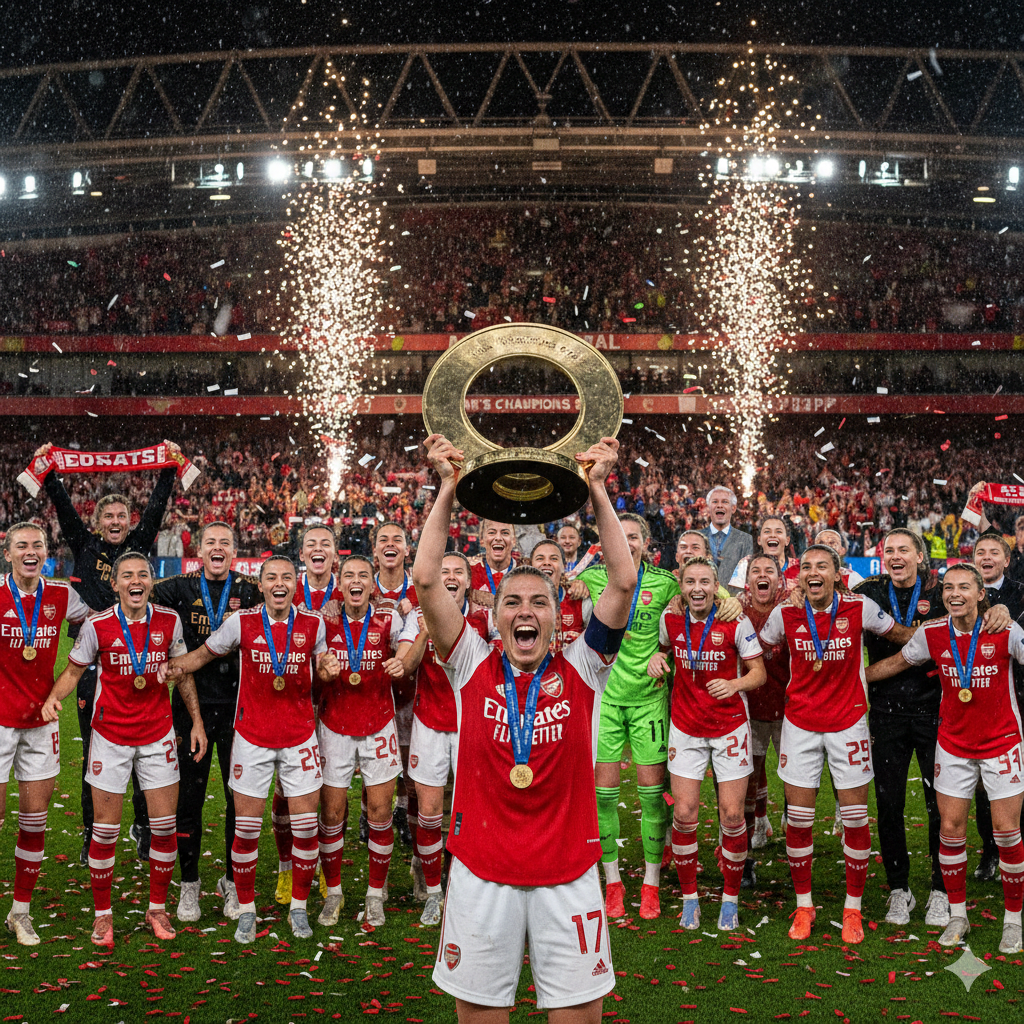
On a rain-soaked night at the Emirates Stadium, history didn’t just happen, it was earned. In a pulsating, 120 minute game that saw the lead trade hands like a high-stakes match, Arsenal Women defeated Brazil’s SC Corinthians 3-2 to become the first ever winners of the FIFA Women’s Champions Cup. This wasn’t just another trophy for the cabinet. By lifting this inaugural crown, the Gunners didn’t just conquer Europe; they conquered the world. The atmosphere in North London was an example of where the women’s game stands in 2026: electric, global, and fiercely competitive. With fans from all over the world sharing the stands, the message was clear: women’s football has arrived on the world stage, and it is here to stay.
A Battle of Amazons
The match was a rollercoaster of elite athleticism and tactical brilliance. Arsenal struck first in the 15th minute through Olivia Smith, the young phenom who continues to prove she is worth every penny of her record-breaking transfer. But Corinthians, the reigning queens of South American football, refused to be spectators in Arsenal’s house. Led by their 40-year-old legendary captain Gabi Zanotti, the Brazilians recovered, equalizing twice to send the game into a nerve-wracking extra time.
The “human” moment of the night came in the 104th minute. Caitlin Foord, the Australian international who had been battling a frustrating goal drought since last September, found herself with the ball and the weight of the tournament on her shoulders. With a clinical finish that shook the back of the net, she didn’t just score a goal; she broke a personal barrier and secured a world title.
A Statement for Gender Parity
Beyond the goals and the glory, this tournament represents an enormous change in the gender perspective of professional sports. FIFA President Gianni Infantino, present at the final, called it the start of a “new era.” For the first time, a global club competition for women has been backed with the financial prestige it deserves. Arsenal walked away with a $2.3 million prize purse, while Corinthians took home $1 million. These aren’t just numbers, they are investments. This prize sets a precedent for professionalization. It tells every club on every continent: If you invest in your women’s team, the world will watch. This is about leveling the pitch and making clear talent will be the only currency that matters.
Resilience and New Foundations
While the night ended in celebration, it wasn’t without its shadows. The injury to Arsenal’s young goalkeeper, Anneke Borbe, who was stretchered off in the final moments, brought a hush over the stadium. It was a moving reminder of the physical toll these athletes endure to reach the summit. Yet, the depth of talent on display was staggering. From Frida Maanum, who was named Player of the Tournament, to the veteran leadership of Kim Little, this Arsenal squad is the blueprint for a modern sports dynasty.
An Eternal First
As the rain finally subsided and the fireworks lit up the London sky, the significance of the moment settled in. You can win a league title every year, but you can only be the first world champion once. This victory for Arsenal belongs to the players who ran until their lungs burned, the fans who traveled across oceans to be heard, and the pioneers who kept the game alive when the doors were closed. The “Women’s Champions Cup” is no longer a dream on a whiteboard; it is a gold-plated reality. Arsenal is on top of the world today, but the real winner is the game itself.

Leave a Reply